
Rehabilitation & Therapy Transport Experts
Safe Journeys. Trusted Drivers. Every Time
Perth Wheelchair Taxi Solutions
The Therapy Runs We Cover Each Week
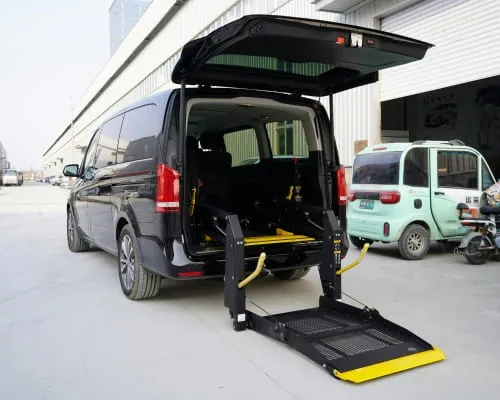
Physiotherapy and occupational therapy make up the bulk of it, usually one or two fixed sessions a week at a private practice or a hospital outpatient department. Hydrotherapy is common through the cooler months and needs its own handling on the return leg. Speech therapy and psychology sessions tend to be shorter and often suit the driver waiting. Day programmes and supported employment are the highest-frequency runs we do, sometimes five days a week, and they are the ones where reliability matters most because non-attendance gets noticed and funding follows attendance. We also carry participants to rehabilitation programmes at Joondalup Health Campus, which runs a 25-bed public rehabilitation ward for Perth's northern corridor, to stroke rehabilitation at Osborne Park Hospital, and to Glengarry Private Hospital on Arnisdale Road in Duncraig. Whatever the programme, the pattern is the same: a fixed time, a fixed destination, and no appetite for surprises.

Perth Wheelchair Taxi Solutions
How a Standing Booking Works
You give us the day, the time and the destination once and the slot becomes yours. It does not go back into a pool, it does not need rebooking, and it does not compete with other fares on the morning. Your access notes go on file at the same time: whether the ramp needs deploying at the top of the driveway rather than the kerb, how long your transfer takes, whether you prefer to be handed over at reception or left at the door. If a week has to be skipped you tell us and that week alone is released. If your therapy time changes at a plan review, one call moves the whole arrangement. Support coordinators can set this up for a participant in a single conversation and then leave it alone, which is generally the outcome everybody wants. Call 0483 926 000 to put one in place.
Perth Wheelchair Taxi Solutions
Why the Same Driver Week After Week Matters

Consistency is doing more work in this service than the vehicle is. A driver who already knows your crossover is steep, that your powerchair headrest sits close to the internal clearance, or that you need an extra two minutes rather than a rushed transfer, will get you to a session calmly instead of turning it into the hardest part of the day. For participants with cognitive disability, acquired brain injury or anxiety, an unfamiliar driver and an unexplained route can be genuinely distressing, and a familiar face removes that entirely. It also has a practical safety dimension, because a driver who has secured your particular chair thirty times will spot when something is not sitting right. We roster for continuity wherever leave and illness allow it, and when a substitute is unavoidable we tell you beforehand rather than letting you discover it at the door. Call 0483 926 000.
Perth Wheelchair Taxi Solutions
What Weekly Therapy Transport Costs
We quote the arrangement rather than the trip, because a weekly run priced trip by trip tells you nothing useful about the year. Most participants fund this from their Core Supports transport budget under Support Category 02, allocated at up to $1,784 a year at Level 1, up to $2,472 at Level 2 for people working or studying up to 15 hours a week or attending a day programme, and up to $3,456 at Level 3 for those working, seeking work or studying 15 or more hours a week who cannot use public transport. Level 2 and Level 3 are where regular therapy attendance usually sits. Where provider travel applies rather than your own transport, the 2026-27 NDIS arrangements allow up to $2.76 per kilometre for a modified accessible vehicle. PTSS cardholders can use the subsidy on eligible taxi trips at 75% up to $35 on a purple card or 50% up to $25 on a yellow card. Call 0483 926 000 and we will map the weekly cost against what your plan actually holds.
Perth Wheelchair Taxi Solutions
Standing Booking, Ad-Hoc Taxi or a Support Worker's Car
Booking a taxi each week is the default and it is the most fragile arrangement available, because every single week is a fresh chance for the job to be dropped, delayed or refused. It also consumes somebody's time indefinitely, usually a family member's or a support coordinator's. A support worker driving you in their own car is genuinely convenient and often the right answer for short local runs, but their vehicle has no ramp, no hoist and no four-point tie-downs, so it only works if you can transfer and your chair folds. It also spends your support hours on driving rather than on support, and the provider travel rate of up to $2.76 per kilometre applies on top. A standing booking with a dedicated accessible vehicle costs more per trip than a support worker's car and less in aggregate than the disruption of an unreliable arrangement, because a therapy programme that gets abandoned costs far more than transport ever did. Where your travel is short, occasional and you can transfer easily, use the support worker. Where it is weekly, in a wheelchair, and matters, call 0483 926 000.
Related Services
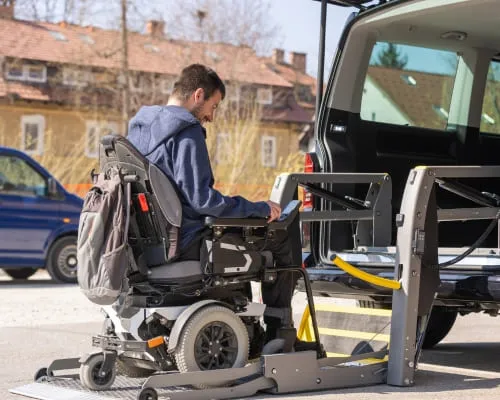
Stay in your own chair, anchored on four-point tie-downs, from your front door to the destination door. Certified ramps and hoists, drivers held to the national wheelchair-restraint competency, and a vehicle reserved for your booking rather than dispatched from the nearest rank.
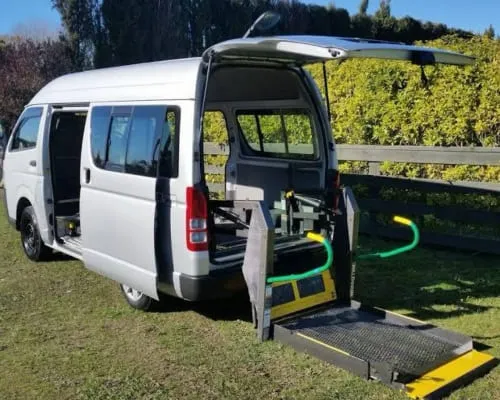
For passengers who need patience more than they need a ramp. A held booking, a driver who walks you to the door instead of the kerb, and PTSS processed on the spot, whether or not you travel seated in a wheelchair.

Transport that clears your plan manager first time. Self-managed and plan-managed participants handled, itemised to the line, with standing weekly bookings for work, study, therapy and day programmes in a wheelchair accessible vehicle with certified ramps and restraints.
TESTIMONIALS
What Our Rehabilitation & Therapy Transport Customers Say About Us
The Process
3 Step Process For Your Rehabilitation & Therapy Transport Needs

Book Ahead
Call or message with your pickup, destination and chair type. We confirm the vehicle, driver and arrival window before you hang up.

We Arrive
Your driver arrives inside the agreed window, checks the access route, then loads and secures your chair with four-point restraints before moving.

Safe Arrival
We take you right to the door, not the kerb, and wait or return for you if your booking includes it.
Rehabilitation & Therapy Transport In Perth
FREQUENTLY ASKED QUESTIONS
Everything you need to know about our Rehabilitation & Therapy Transport In Perth
How much can NDIS providers charge for travel?
Under the 2026-27 NDIS pricing arrangements, provider travel in a modified or accessible vehicle can be charged at up to $2.76 per kilometre, against $0.99 per kilometre for a standard vehicle, with a travel-time cap of 30 minutes in metropolitan areas. That is provider travel, meaning a worker's journey to reach you, and it is a separate thing from transporting you to your appointment. Your own trips are normally funded from your Core Supports transport budget under Support Category 02. Therapy providers themselves can now claim travel at half their hourly rate rather than the full rate. If your invoices are mixing these up, that is worth raising with your plan manager, and we itemise ours specifically so the distinction is visible.
How does a standing booking work?
You tell us the day, the time and the destination once, and the slot is then held for you permanently rather than being rebooked each week. Your access notes, chair dimensions and any preferences about assistance are stored against the booking so nothing has to be re-explained. If a week needs to be skipped for a holiday or an illness, you let us know and we release just that week without losing the slot. If your therapy time changes at a review, one call moves it. The point is that the arrangement should require no ongoing effort from you or your support coordinator, because the effort of rebooking weekly is exactly what causes people to drop out of programmes.
Can I have the same driver each week?
Wherever the roster allows it, yes, and we treat it as the default rather than a special request. Familiarity does real work in this service. A driver who already knows that your crossover is steep, that your powerchair needs the ramp angle managed carefully, or that you find an unexplained detour distressing will get you there faster and with far less stress than a stranger reading a note. For participants with cognitive disability or anxiety, the same face each week is often the difference between attending and refusing to go. We cannot promise it absolutely, because leave and illness are real, but we will tell you honestly when a substitute is coming rather than surprising you on the day.
What does weekly therapy transport cost?
It depends on distance and whether the driver waits through the session, and we quote the whole weekly arrangement rather than pricing trips one at a time. Most participants fund this from their Core Supports transport budget, which is allocated at up to $1,784 a year at Level 1, up to $2,472 at Level 2 and up to $3,456 at Level 3. Level 2 and Level 3 are the ones that usually apply to regular therapy and day-programme attendance. If you hold a PTSS card, the subsidy can apply to eligible taxi trips at 75% up to $35 for a purple card or 50% up to $25 for a yellow card. Call 0483 926 000 with the day, time and destination and we will price the year rather than the trip.
What happens if my therapy session is cancelled at short notice?
Let us know as early as you can and we release that week without any effect on your standing slot. Therapists cancel, people get unwell, and a service that penalised either would be unusable. Where we ask for reasonable notice is the same-morning cancellation, simply because the vehicle has already been rostered away from other work. If your programme pauses for several weeks, for example over a break, tell us the return date and we hold the slot rather than closing it. The arrangement is designed to survive real life.
Do you handle hydrotherapy, and what about getting home afterwards?
Yes, and hydrotherapy is worth flagging when you book because the return leg needs a little more thought. Passengers are often tired afterwards, transfers can be slower, and there is usually wet kit and a towel to manage. We allow additional time on the return rather than running it to the same schedule as the outbound trip. If your session runs at a pool with limited accessible parking, we sort the pickup point in advance so you are not waiting outside in the cold in June or the heat in January. Tell us it is hydrotherapy at booking and the arrangement is built accordingly.
Request A Free Rehabilitation & Therapy Transport Quote
Contact us
BUSINESS
SERVICES
OPERATING HOURS
Sun: 24 hr
Mon: 24 hr
Tue: 24 hr
Wed: 24 hr
Thu: 24 hr
Fri: 24 hr
Sat: 24 hr
ABN 93 178 937 861