
Disability Taxi Experts
Safe Journeys. Trusted Drivers. Every Time
Perth Wheelchair Taxi Solutions
Who Rides With Us and Why
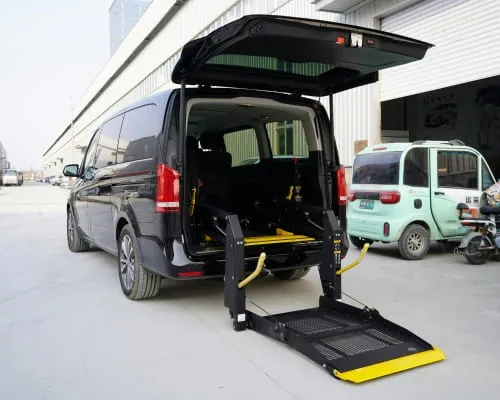
Roughly half our passengers are not travelling seated in a wheelchair at all. We carry older passengers with walking frames who need the vehicle brought close and an arm on the way down the front steps. We carry people with low vision who need to be walked in and handed over at a reception desk rather than dropped near an entrance. We carry passengers with cognitive disability for whom an unfamiliar driver and an unexplained route is genuinely distressing, which is why the same driver on a standing booking matters so much. We carry NDIS participants heading to work, study and day programmes, and private passengers with no funding at all. And we carry wheelchair users in the same vehicles with the ramp deployed. The common thread is not the equipment, it is that somebody needed a driver who would not rush them.
Perth Wheelchair Taxi Solutions
Booking a Vehicle That Is Actually Held for You
When you call, we take the pickup address, the destination, the appointment time you need to hit rather than the time you would like to leave, and what help you need at both ends. That information goes against a specific vehicle and driver, not into a general pool. It matters because the standard industry model releases accessible jobs to whoever claims them, which is precisely how a booking made a fortnight ago gets cancelled twenty minutes before pickup. Ours cannot be dropped that way. If you travel the same route each week, we set it up as a standing booking and the slot stays yours without you rebooking. Access details are stored too, so the note about the narrow driveway or the steep crossover does not have to be repeated every single time. Call 0483 926 000 and it takes about three minutes.
Perth Wheelchair Taxi Solutions
Why We Never Quietly Drop a Short Local Fare
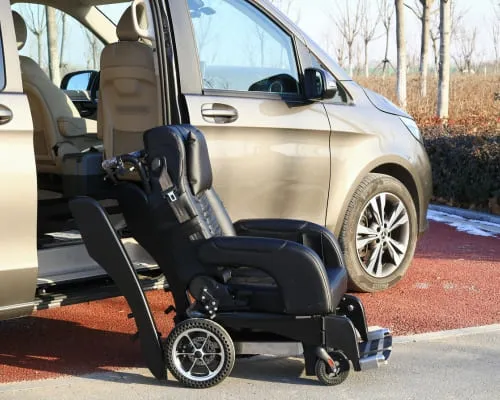
Short-fare refusal is the complaint that comes up most often in this market and it is rarely stated openly. A passenger books a four-kilometre trip to a GP, waits, and is told nobody is available, when what has actually happened is that the job was worth less than the airport run the driver was holding out for. We built this business specifically to remove that incentive, which is why bookings are committed rather than auctioned. We stepped away from high-volume taxi work after a decade of watching the same passengers get stranded by the same behaviour. It also means we tell you when we genuinely cannot cover a time, rather than accepting and hoping. That honesty is worth more to somebody with a specialist appointment than an optimistic yes. Call 0483 926 000 and you will get a straight answer.
Perth Wheelchair Taxi Solutions
What a Disability Taxi Costs in Perth With PTSS
Metered trips run on the standard Western Australian on-demand fare structure, and the Passenger Transport Subsidy Scheme then does most of the work. A yellow standard card covers 50% of the fare up to a $25 subsidy per trip, and a purple wheelchair card covers 75% up to $35 when you travel seated in your chair. On a typical suburban run the subsidy absorbs the bulk of the fare and you pay a modest gap, while on a long cross-city trip the cap is reached and the balance above it is yours. The important change is that paper TUSS vouchers stopped being accepted on 1 October 2025, so the card is now the only route to the subsidy. For private hourly work such as a multi-stop day out, published market rates for an accessible vehicle in this part of Perth sit around $45 to $65 per hour on weekdays, higher in the evenings and at weekends, and we quote your booking rather than reading from a table. NDIS participants using provider travel can be charged up to $2.76 per kilometre for a modified vehicle under the 2026-27 arrangements. Call 0483 926 000 for a figure on your actual trip.
Perth Wheelchair Taxi Solutions
Booked Disability Taxi, Rank Dispatch or Rideshare
Rank or hail dispatch is the default most people fall back on, and for an able-bodied passenger it works fine. The moment an accessible vehicle or an unhurried driver is required, the model starts failing, because the job competes against every other fare in the queue and loses. Rideshare is the cheapest option on paper and the worst fit in practice for this group: no ramp, no tie-downs, no PTSS acceptance, and a driver rated on speed. A pre-booked disability taxi costs a little more to operate and returns the thing that actually matters, which is certainty about who is coming and when. Community transport is the genuine alternative worth considering, and if your trip is a routine weekly shop on a fixed roster it may well be the better and cheaper choice. Where community transport cannot help is anything scheduled at short notice, outside its operating days, or needing a door-through-door handover. That is the gap we fill. Call 0483 926 000.
Related Services
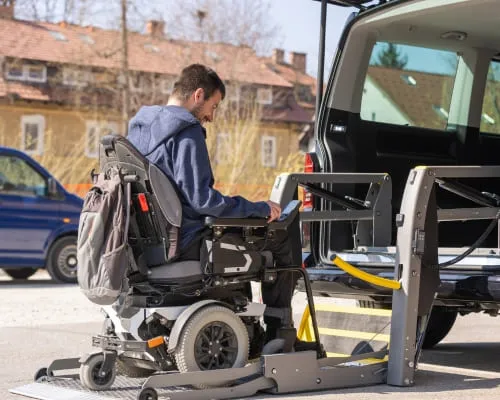
Stay in your own chair, anchored on four-point tie-downs, from your front door to the destination door. Certified ramps and hoists, drivers held to the national wheelchair-restraint competency, and a vehicle reserved for your booking rather than dispatched from the nearest rank.
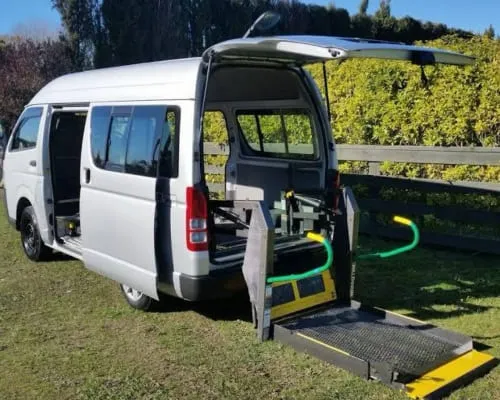
For passengers who need patience more than they need a ramp. A held booking, a driver who walks you to the door instead of the kerb, and PTSS processed on the spot, whether or not you travel seated in a wheelchair.

Transport that clears your plan manager first time. Self-managed and plan-managed participants handled, itemised to the line, with standing weekly bookings for work, study, therapy and day programmes in a wheelchair accessible vehicle with certified ramps and restraints.
TESTIMONIALS
What Our Disability Taxi Customers Say About Us
The Process
3 Step Process For Your Disability Taxi Needs

Book Ahead
Call or message with your pickup, destination and chair type. We confirm the vehicle, driver and arrival window before you hang up.

We Arrive
Your driver arrives inside the agreed window, checks the access route, then loads and secures your chair with four-point restraints before moving.

Safe Arrival
We take you right to the door, not the kerb, and wait or return for you if your booking includes it.
Disability Taxi In Perth
FREQUENTLY ASKED QUESTIONS
Everything you need to know about our Disability Taxi In Perth
How much will I actually pay for a disability taxi after the PTSS subsidy?
Your out-of-pocket cost is the fare minus the subsidy, and the subsidy depends on which card you hold. A standard yellow PTSS card covers 50% of the fare up to a maximum $25 subsidy per trip. A purple card covers 75% up to a maximum $35 subsidy, but only when you are travelling seated in your wheelchair in a wheelchair accessible vehicle. On a short suburban run the subsidy usually absorbs most of the fare and you pay a small gap. On a long cross-city trip the cap is reached and the balance above it is yours, so if the trip is a long one it is worth asking us for the estimate first on 0483 926 000.
Who is eligible for PTSS in WA?
The Passenger Transport Subsidy Scheme is for Western Australians with a disability that prevents them from safely or independently using conventional public transport, and eligibility is assessed by the Department of Transport rather than by us. Applicants generally need supporting evidence from a health professional, and the department decides whether you receive the standard yellow card or the wheelchair purple card. The distinction matters because the purple card carries the higher 75% and $35 rate but applies when you travel seated in your wheelchair. We are not the assessing body and we cannot approve or decline anyone. What we can do is tell you how the card works in practice on our vehicles before you apply.
How do I apply for a transport subsidy?
You apply to the Western Australian Department of Transport, which administers the Passenger Transport Subsidy Scheme, and the application asks for evidence of your mobility needs from a health professional. Once approved you receive a PTSS card, and since 1 October 2025 that card is the only way to access the subsidy, because the old paper TUSS vouchers stopped being accepted on that date. If you are still holding a book of vouchers, they will not work on any WA taxi and you need to move across. Bring the card with you and the driver processes the subsidy at the end of the journey rather than asking you to claim it back later. If you are unsure whether your card is current, call 0483 926 000 before you travel.
Do you take short local trips, or will I be refused?
We take them, and this is deliberately how the business is set up. A four-kilometre run from home to a local medical centre is the single most commonly refused fare in accessible transport, because a driver on general dispatch would rather hold out for an airport run. Because your booking is held against a specific vehicle rather than released to the pool, there is no incentive for anybody to drop it. If you have been stranded before by a driver who accepted and then cancelled, this is the difference. Call 0483 926 000 and book the short trip without apologising for it.
Can you help me down my front steps and into the vehicle?
Yes, and across Perth's older suburbs this is a large part of what the job actually involves. Post-war homes through Dianella, Yokine, Morley and Balcatta commonly have three or four steps up to a front verandah and no ramp ever fitted, and the 1970s stock through Duncraig, Greenwood and Kingsley adds sloping blocks and stepped entries. Your driver will come to the door, offer an arm or steady a frame, carry shopping or a bag, and see you into the vehicle rather than watching from the kerb. What we will not do is a physical lift or any transfer that needs a hoist at your end, because that is a manual-handling task for a support worker or an occupational therapist. Tell us what help you need when you book so the right amount of time is allowed.
Should I book a disability taxi or a wheelchair accessible vehicle?
If you travel seated in your wheelchair, you need a wheelchair accessible vehicle and you should book that specifically, because it is also the only way the purple PTSS card's 75% rate applies. If you can transfer into a normal car seat and your chair or frame folds, a standard vehicle with an attentive driver is usually more comfortable and easier to get in and out of. If you are somewhere in between, for instance you can manage a transfer on a good day but not reliably, book the accessible vehicle and use the ramp only if you need it on the day. We would rather send the larger vehicle and not need it than send the wrong one. Call 0483 926 000 and describe how you travel.
Request A Free Disability Taxi Quote
Contact us
BUSINESS
SERVICES
OPERATING HOURS
Sun: 24 hr
Mon: 24 hr
Tue: 24 hr
Wed: 24 hr
Thu: 24 hr
Fri: 24 hr
Sat: 24 hr
ABN 93 178 937 861